The future-ready workplace supports connection, co-creation, and adaptability. See what leaders are prioritizing and why offices must evolve now.
New Steelcase Leader Research makes one thing clear: the office is no longer just where work happens — it’s a strategic tool for connection, co-creation, and the kind of work people simply can’t do alone or on a screen.
But creating a workplace that truly supports those moments requires flexibility. Leaders feel that urgency, with 96% planning updates in the next two years, driven by a need for more adaptable spaces (42%), changing work needs (38%), growing teams (35%), and outdated environments (33%).
This shift isn’t about chasing trends. It reflects a deeper truth: the way people work has changed, and many offices haven’t kept up. The future-ready workplace needs to support a dynamic mix of hybrid collaboration, in-person connection, AI-accelerated workflows, and increasingly fluid team structures. And to do that well, the relationship between technology and space should be rethought from the ground up.
What Role Is AI Playing in the Workplace?
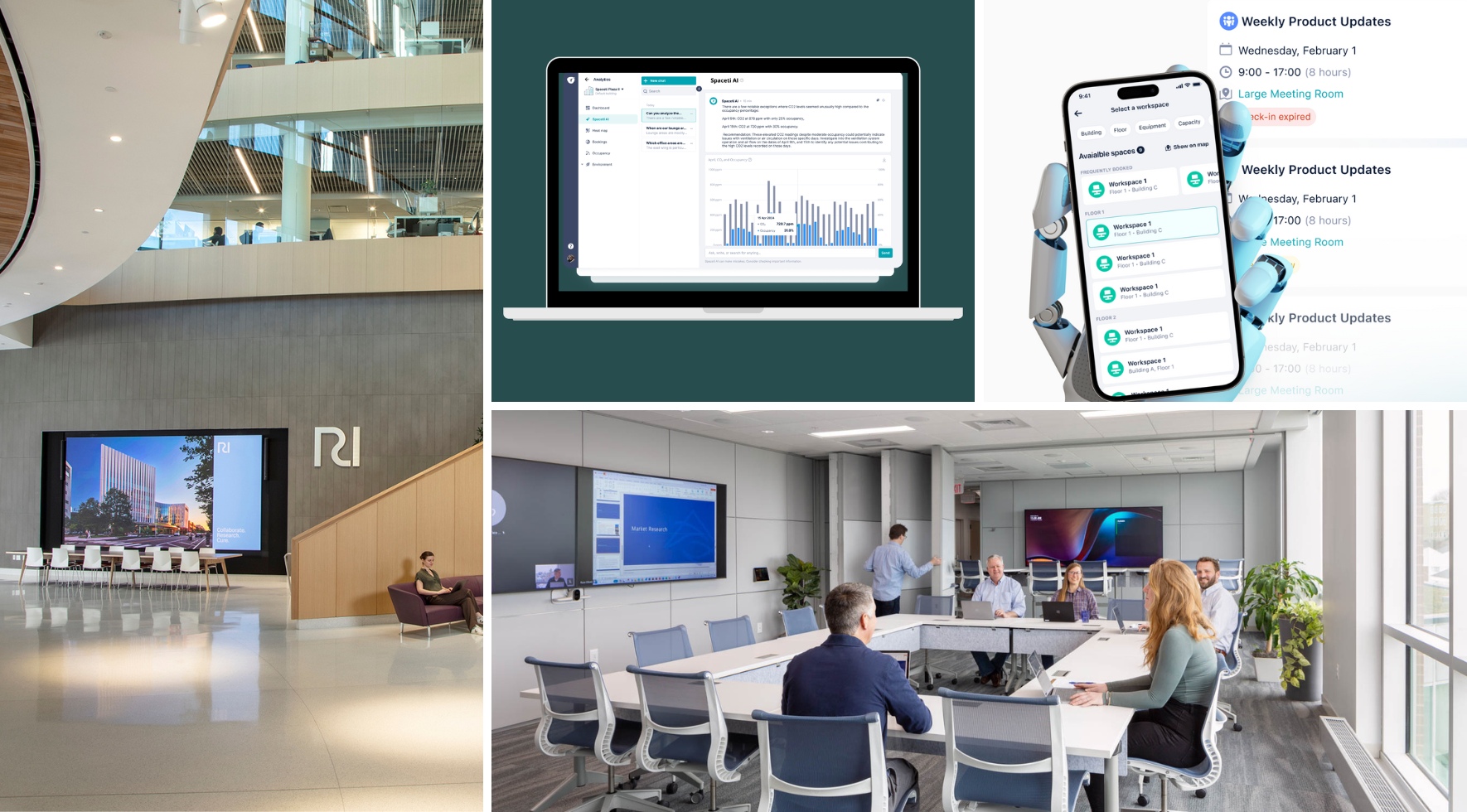
AI is already reshaping how people work, and we have the data to prove it. Steelcase WorkSpace Futures research shows AI is speeding up routine tasks, and when people treat it as a strategic collaborator, they save 105 minutes a day, time that gets reinvested into deeper thinking and better work. But the pace comes with pressure: 45% of frequent AI users report higher burnout, which means workplaces need to support wellbeing and human connection more intentionally. Collaboration is changing, too with 60% of meetings now unscheduled and AI tools fueling more asynchronous teamwork. As work patterns shift, the workplace should evolve right alongside them — creating spaces that support focus, flexible hybrid moments, and the kind of deep-thinking people can’t outsource to AI.
Why Workplace Technology Needs to Lead the Conversation
With routine tasks handled faster than ever thanks to AI, people are now coming to the office for what it can’t replicate: connection, creativity, co-thinking, and that spark you only get in person. But those moments work best when the technology around them feels seamless and supportive.
If the room doesn’t support hybrid collaboration…
If the tools don’t work intuitively…
If meetings take five minutes to get started…
The experience falls flat.
When technology leads the design conversation, everything becomes easier. Teams move between modes more fluidly. Hybrid collaboration feels natural rather than forced. Starting meetings become intuitive, not overwhelming. And employees feel supported, not frustrated.
Tech sets the tone for the entire experience. If it’s clunky, the space feels clunky. If it’s intuitive, the entire environment feels elevated.
Integrating Workplace Technology and Space for the AI Era
The goal isn’t to flood the office with more equipment or add screens for the sake of screens; the goal is harmony. Technology and space should be designed as co-authors of the workplace experience, not separate tracks that get stitched together at the end.
A room designed for video collaboration shouldn’t feel like a conference room that had a camera added at the last minute. A flexible multi-use space shouldn’t rely on tech that only supports one type of work. And an AI-ready workplace shouldn’t require a renovation every time people’s workflows evolve.
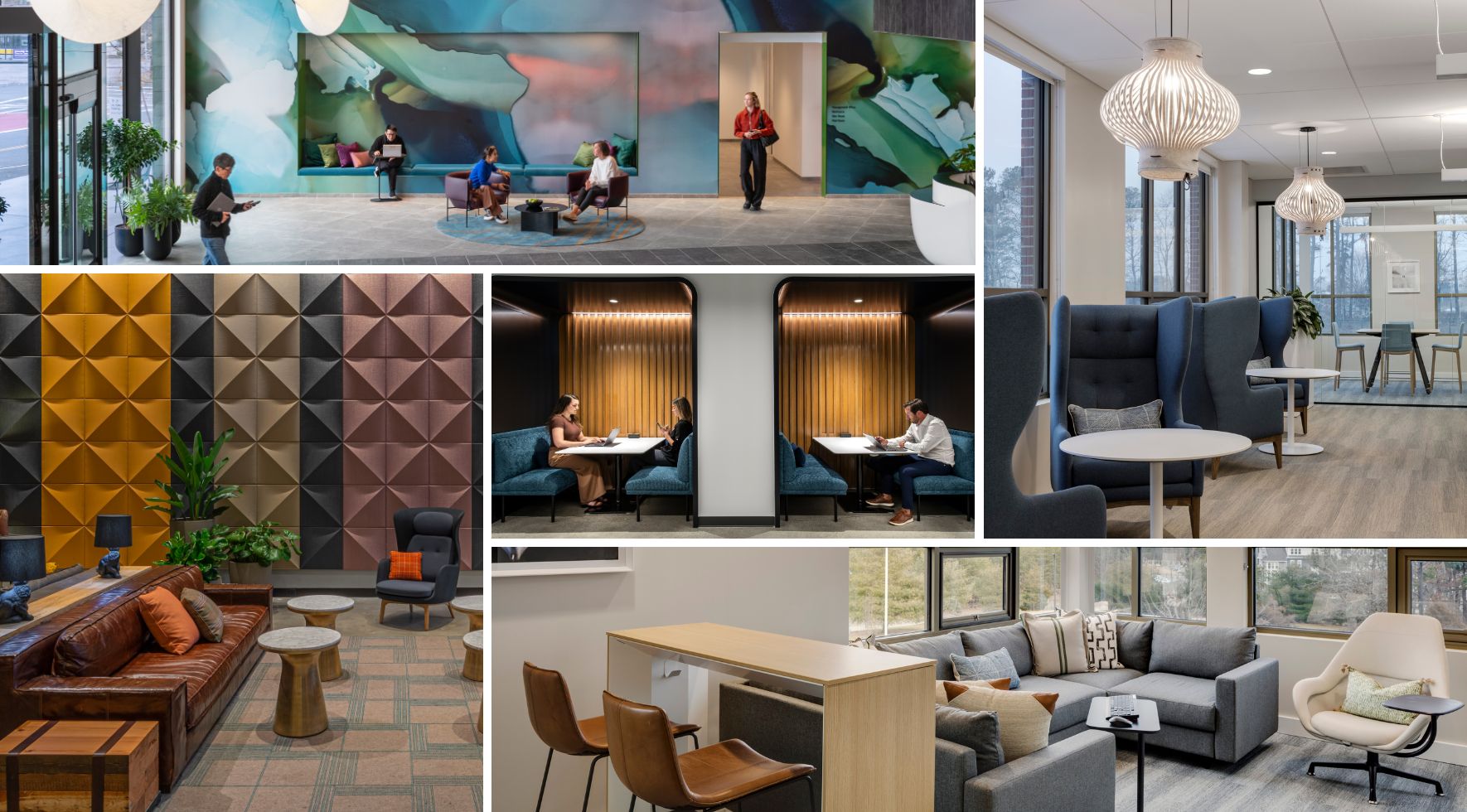
You can see this philosophy in our own spaces — and it’s the same lens we bring to clients who are navigating these shifts too:
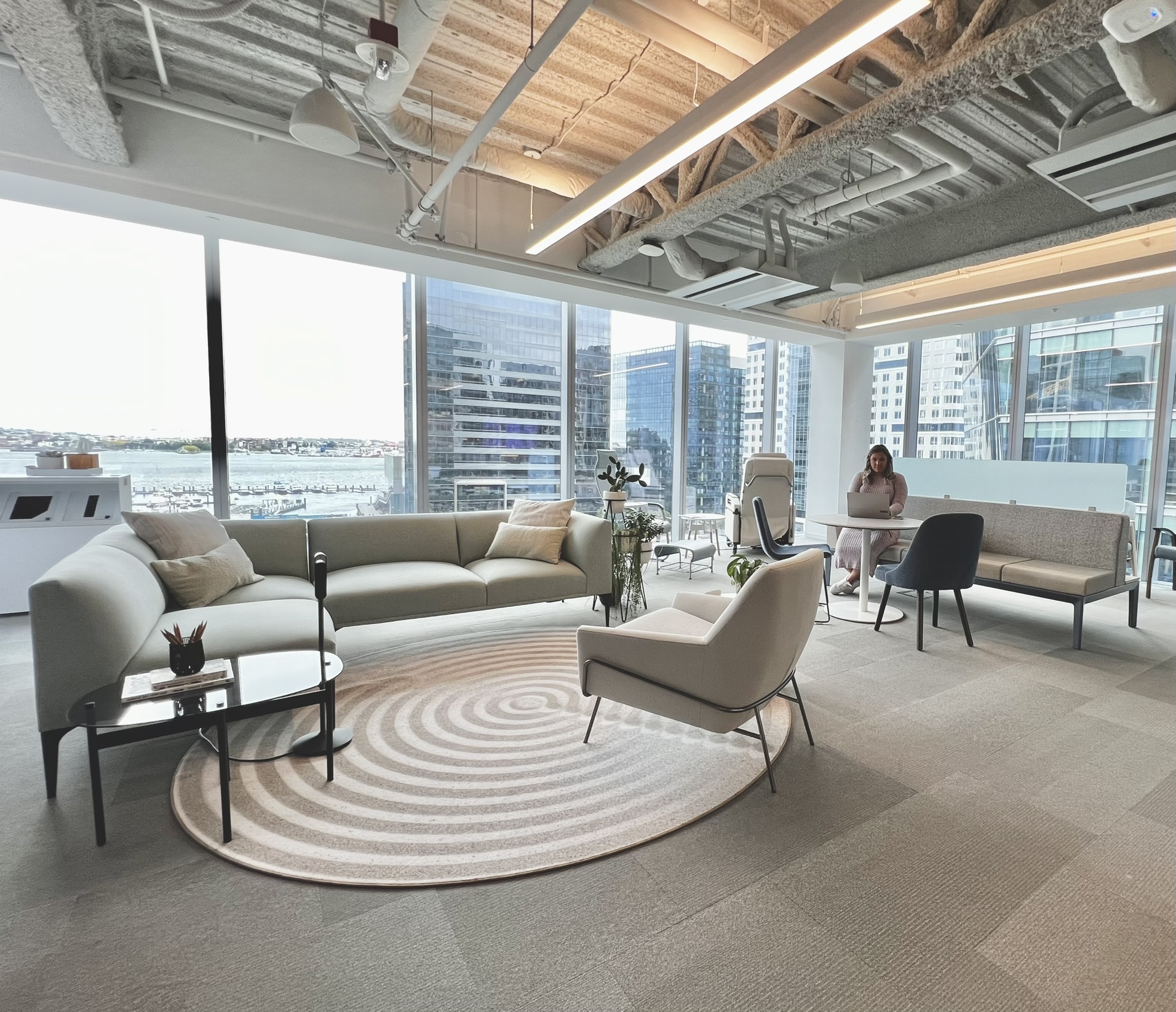
Boston WorkLife
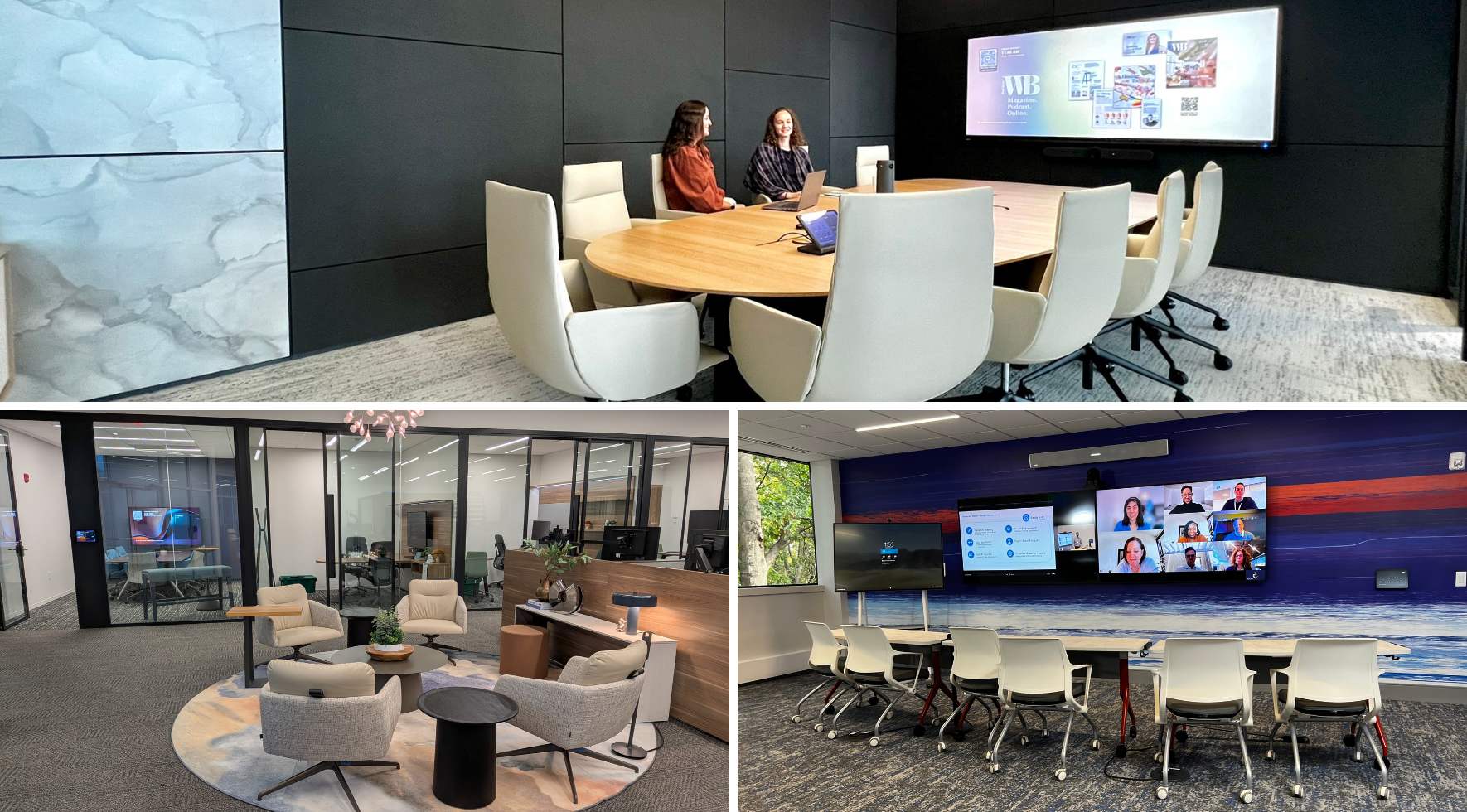
Our Boston WorkLife was created to show what it looks like when technology and space are intentionally choreographed. Hybrid rooms balance acoustics, camera positioning, content-sharing tools, lighting, and furniture placement so collaboration feels natural whether you’re on-site or remote. Every detail is considered, resulting in spaces that feel intuitive, polished, and purpose-driven.
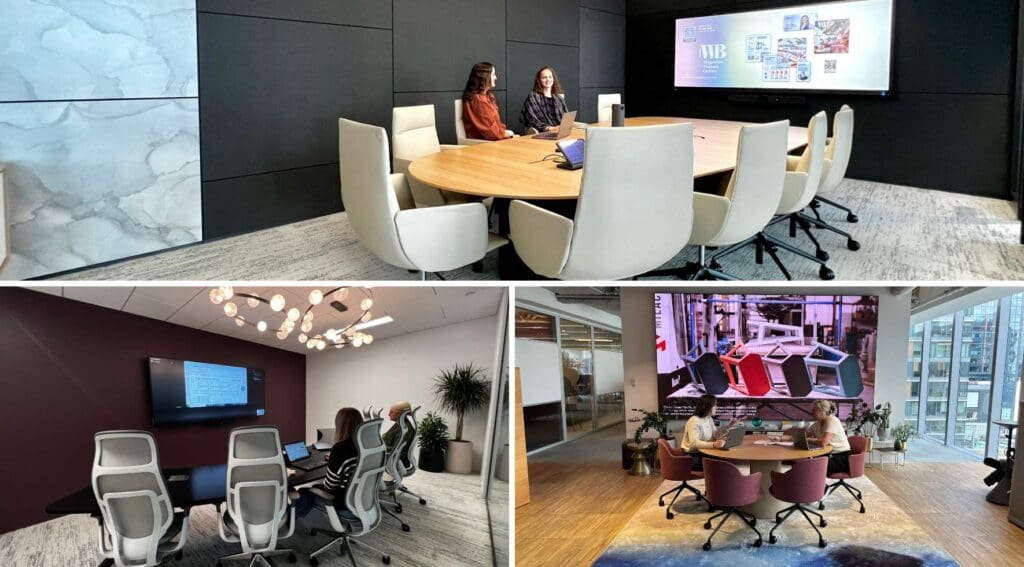
East Hartford’s Workplace Innovation Hub
This space in East Hartford gives our teams a place to experience what flexible, tech-enabled environments can look like in practice. Rooms shift between modes seamlessly, supporting training, team sessions, hybrid collaboration, or focus work without friction. The technology is approachable and intuitive, showing how the right tools can make flexibility feel effortless.
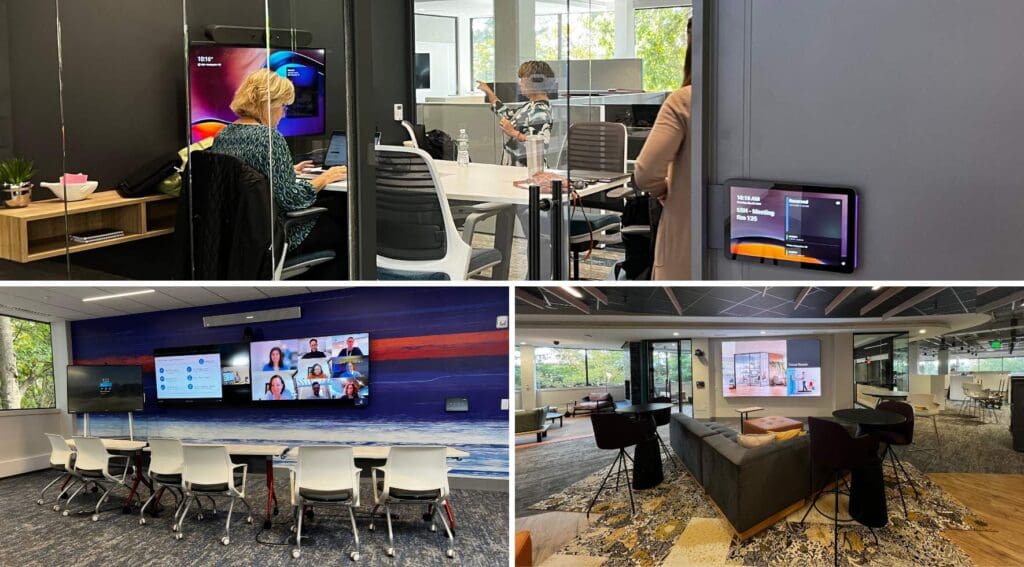
Stamford Office
Our Stamford office refresh was about sharpening how we show up for clients. The space reflects a more refined, intentional approach to hybrid work, with technology and layout working quietly in the background to support conversation, ideation, and decision-making. It’s designed to feel polished but approachable, giving teams and clients a clear view into how thoughtful updates can elevate the way people meet and collaborate without starting from scratch.
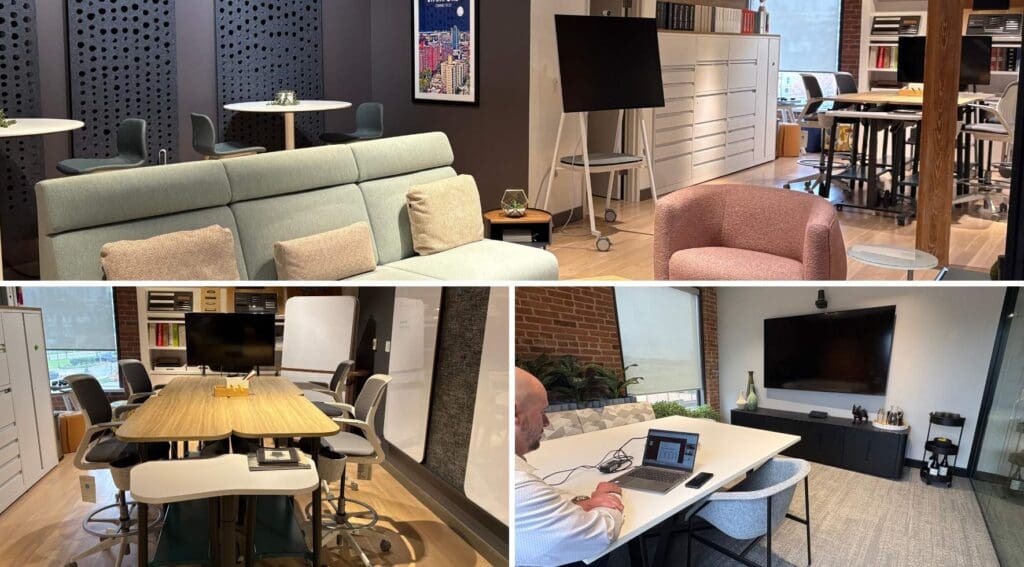
Maine Office
Our Maine space in Portland is designed to feel approachable, practical, and deeply connected to how teams work day to day. It showcases flexible solutions that support focused work, small group collaboration, and hybrid conversations without unnecessary complexity. The environment emphasizes comfort, adaptability, and thoughtful technology choices, offering a clear, real-world view of how well-designed spaces can support people, projects, and long-term growth.
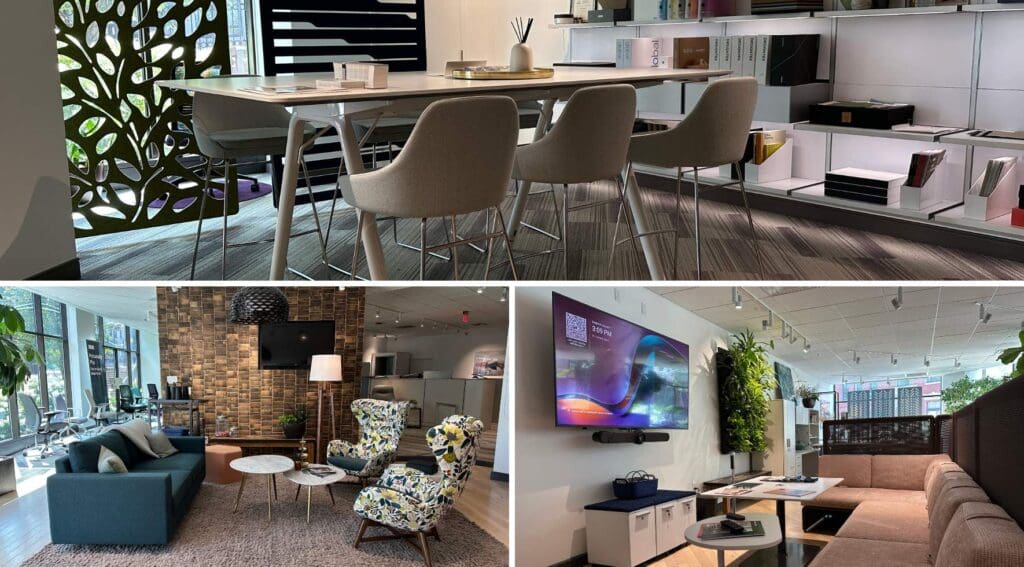
New Andover Showroom!
Andover was designed with mid market organizations in mind, offering practical, scalable examples of how technology and space can work together without overcomplication. The showroom focuses on real-world solutions that support hybrid meetings, focused work, and team collaboration in ways that are flexible and easy to understand. It’s a place to experience what works now, with the confidence that it can grow and adapt as needs change.
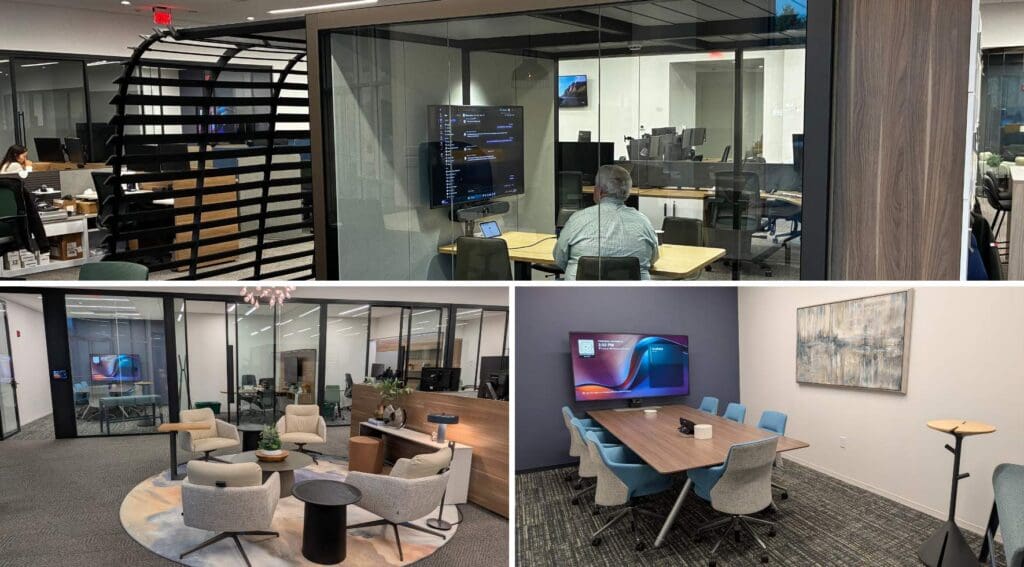
Manchester Office
Manchester is being reimagined from the ground up to better reflect how we work today and how we go to market. This renovation is focused on creating a tighter, more cohesive experience that highlights the breadth of our portfolio and how furniture, technology, and architectural solutions work together. The goal is a space that supports collaboration internally while clearly telling our story to clients, partners, and the design community through intentional integration.
Looking Ahead
The workplace is entering a new chapter where technology and people share the spotlight. And while AI may be the catalyst pushing organizations to rethink their environments, the end goal hasn’t changed: creating spaces where people can do their best work.
When technology leads, and space stays in sync, the workplace becomes more human, more adaptable, and more aligned with how people work today and in the future.