See how concept development, workplace visualization, and material storytelling shape spaces that work and inspire through the eyes of our own designer Kat Monahan.
Great design doesn’t start with furniture or finishes. It starts with listening. For our own designer Kat Monahan, every project begins by uncovering what matters most to the client, how a space should feel, and how each decision can support both experience and performance. From early concepting and mood boards to detailed visualization and material palettes, Kat’s process bridges creative storytelling with technical precision. In this behind-the-scenes conversation, she shares how ideas evolve from abstract inspiration into fully realized environments and why thoughtful design always balances imagination with real-world function.
Can you start by sharing a bit about your role and what part of the design process you’re most passionate about?
Kat: I’m a Designer here at Red Thread specializing in ancillary furniture, workplace visualization and finish selection. The role of a Furniture Dealer Designer is both creative and technical, and with my particular specialties requires knowledge across several areas. I have a deep understanding not only of Steelcase and partner furniture, but also of a wide variety of open line manufacturers. Additionally, I’m trained in visualization software and also have considerable knowledge of textiles and furniture finishes. With my background in Interior Design and my previous experience in an Architecture & Design role, I utilize my technical knowledge on a daily basis when referencing building code, coordinating between trades, understanding architectural finishes and much more. My typical day includes a wide range of tasks, including but not limited to: 3D CAD modeling in CET, space planning, rendering/3D visualization and animations, developing finish palettes, writing furniture specifications, install coordination, creating presentation decks, etc. My favorite part of the design process is conceptual development. Setting the stage for a project with a strong concept that reflects your client’s brand and vision is essential to a successful end result. I use my concept to inform every design decision I make, ensuring that every choice is made with purpose and intention.
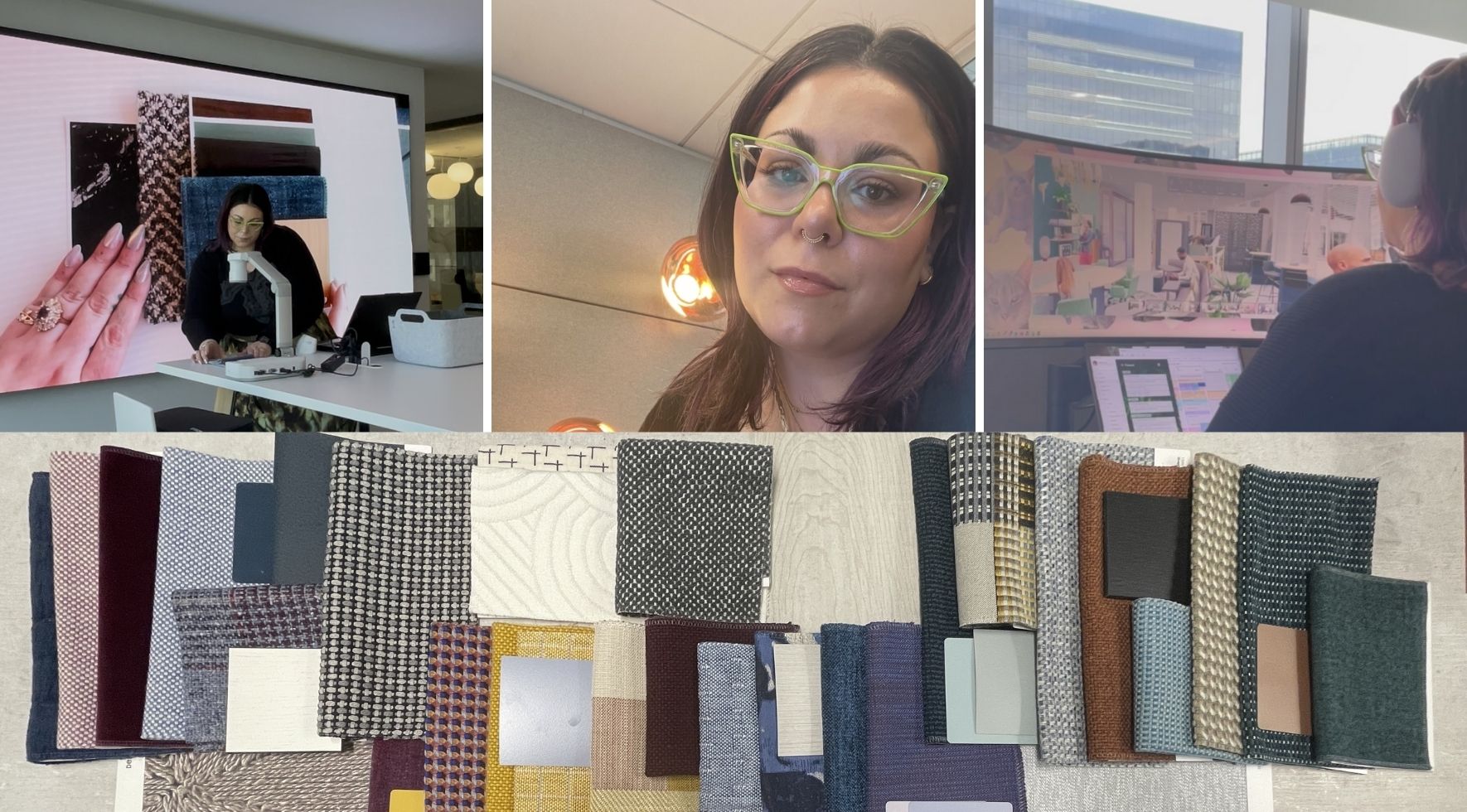
IMAGE: (Left) Kat working in the Thread Lab materials library. (Middle) Kat in the Boston office. (Right) Kat working on her computer in visualization software. (Bottom) One of Kat’s finish palettes.
When you begin exploring a new project, what inspires your creative direction — the client’s story, the space itself, or something else?
Kat: When I develop a concept for my designs, my process starts by determining what is most important to my client. Whether it’s having a strong brand identity within the space that ties back to the company’s ethos, creating a connection between the space and its geographical location, or even pulling inspiration from the client’s favorite piece of artwork – I always root my concept with what my client’s goals are first. Next, I begin to digest the design of the space, ensuring that my furniture scope blends seamlessly into the architecture and interior design of the space. I’ll coordinate with the interior designer at this point to gather information about any key architectural elements and interior finishes. This tends to be where I begin to pull my color palette from & where I decide if the furniture wants to compliment or contrast the interior space. Lastly, I ask a vital question – how do you want the space to FEEL? The answer to this question helps to direct not only the look of the furniture, but also the feel of the “sit” on a particular sofa or the tactile touch to a specified fabric. It helps me determine the layout of the space, the vibe of the space, and even helps guide the furniture selection process. Once I’ve done all of the information gathering, I like to create a visual representation of my concept to ensure I’m aligned with my client. Then I hit the ground running and dig into design!

IMAGE: Example of Kat’s concept development. She illustrates her concept through a concept statement, inspirational concept images and even concept diagrams.
How do you translate early conversations and abstract ideas into something tangible for a client to react to?
Kat: I utilize concept boards and mood boards throughout most of my process. They’re a great tool during both early conceptual development and further along in the process after product selections and finish selections have been made. They can really help create a better cohesive vision of the space before diving into 3D space planning.

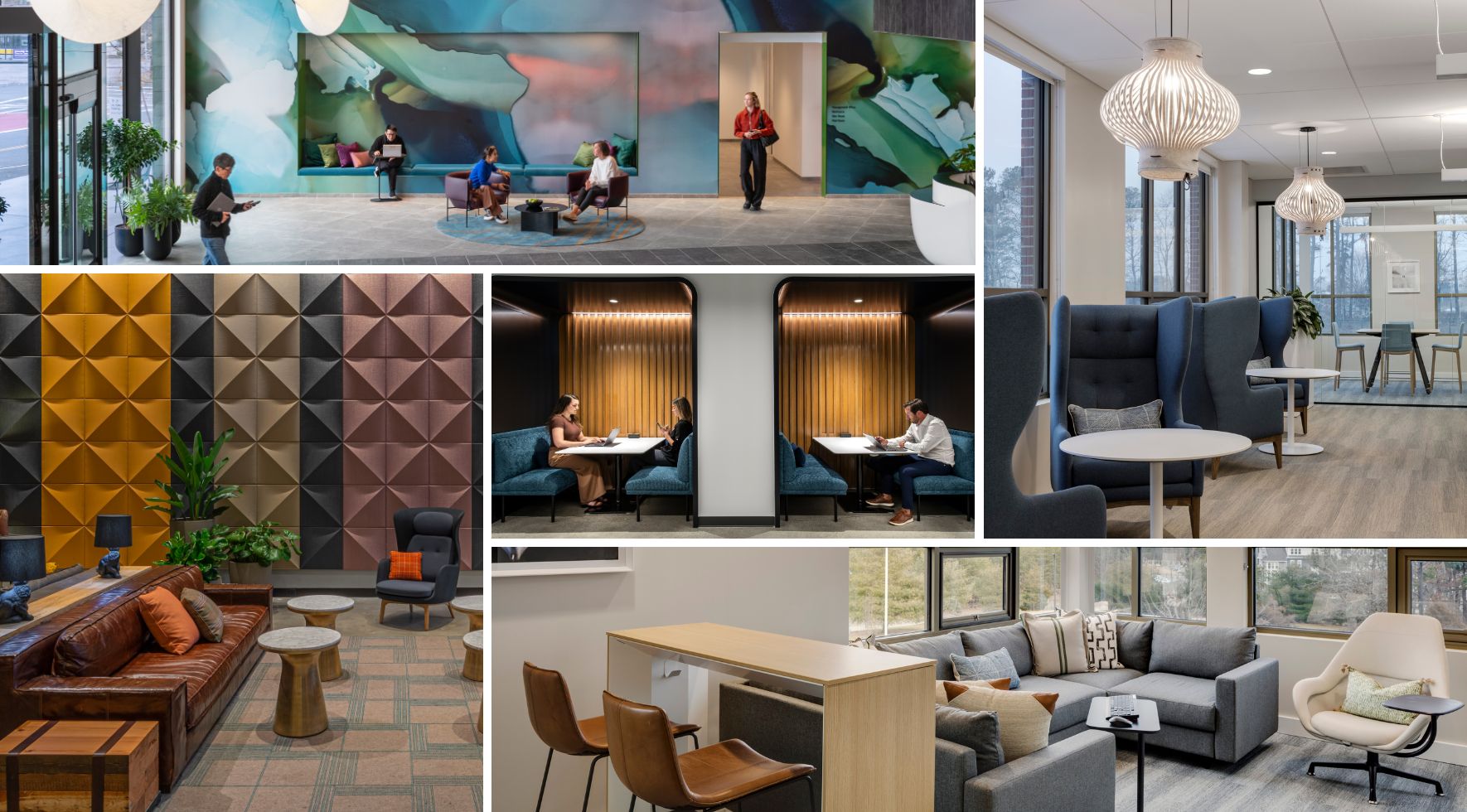
IMAGE: Example of Kat’s conceptual furniture mood boards. Kat blends together furniture, finishes and architectural elements in an abstract way to help visualize the look-and-feel of the space.
Where do mood boards, palettes, or material studies fit into that process?
Kat: One of my favorite tools to utilize during concept development is mood-boarding. Creating conceptual mood boards for my projects early on in the process helps both myself and my client visualize their space three-dimensionally before plan development, product selection or finish selection even begin. I also like to take early conceptual mood boards and refine them with the final selections to visualize in even more detail. Mood boards can come during any point of the process, in my opinion! After furniture selections are made, I’ll start developing the material palette in more detail. It’s fine to develop an early conceptual finish palette too, but I really like to root my palettes in reality as much as possible – I’ll pre-vet my selections and present options that fit within my project guidelines (durability, sustainability guidelines, cleaning protocols, graded-in options, etc.).
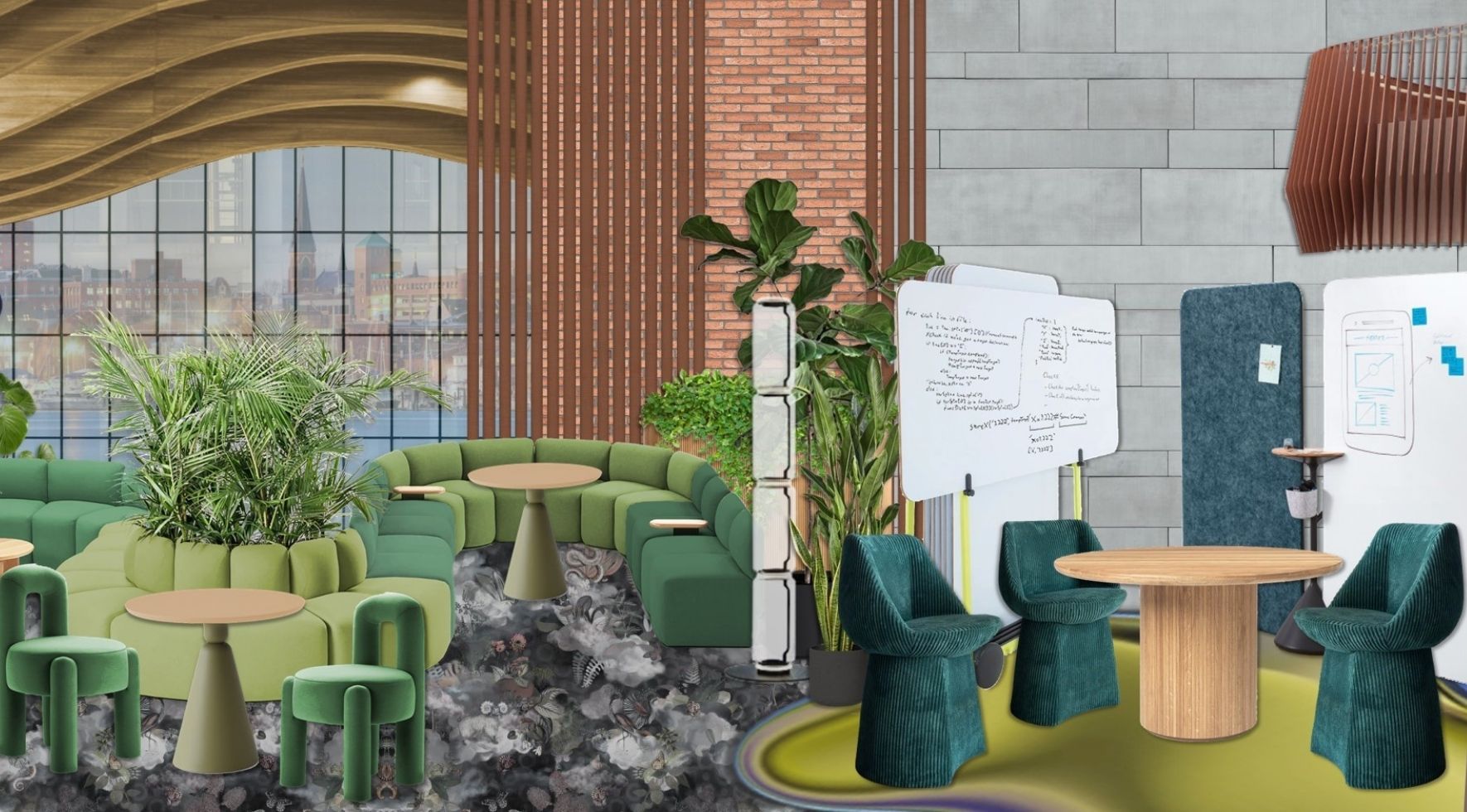
IMAGE: Example of one of Kat’s more developed furniture mood boards. Kat incorporates furniture, finishes and architectural elements to create a 2D visual that illustrates the look-and-feel of the 3D space.
How do you use visualization tools — whether physical samples or digital renderings — to help teams and clients see a unified vision?
Kat: I’m trained in specialty visualization software that allows me to merge my architectural model with my furniture models, apply finishes and create a photo-realistic rendering for my clients. I can even go as far as to create animated walk-throughs of a fully rendered space. These tools are so powerful in helping visualize your space before it’s built.
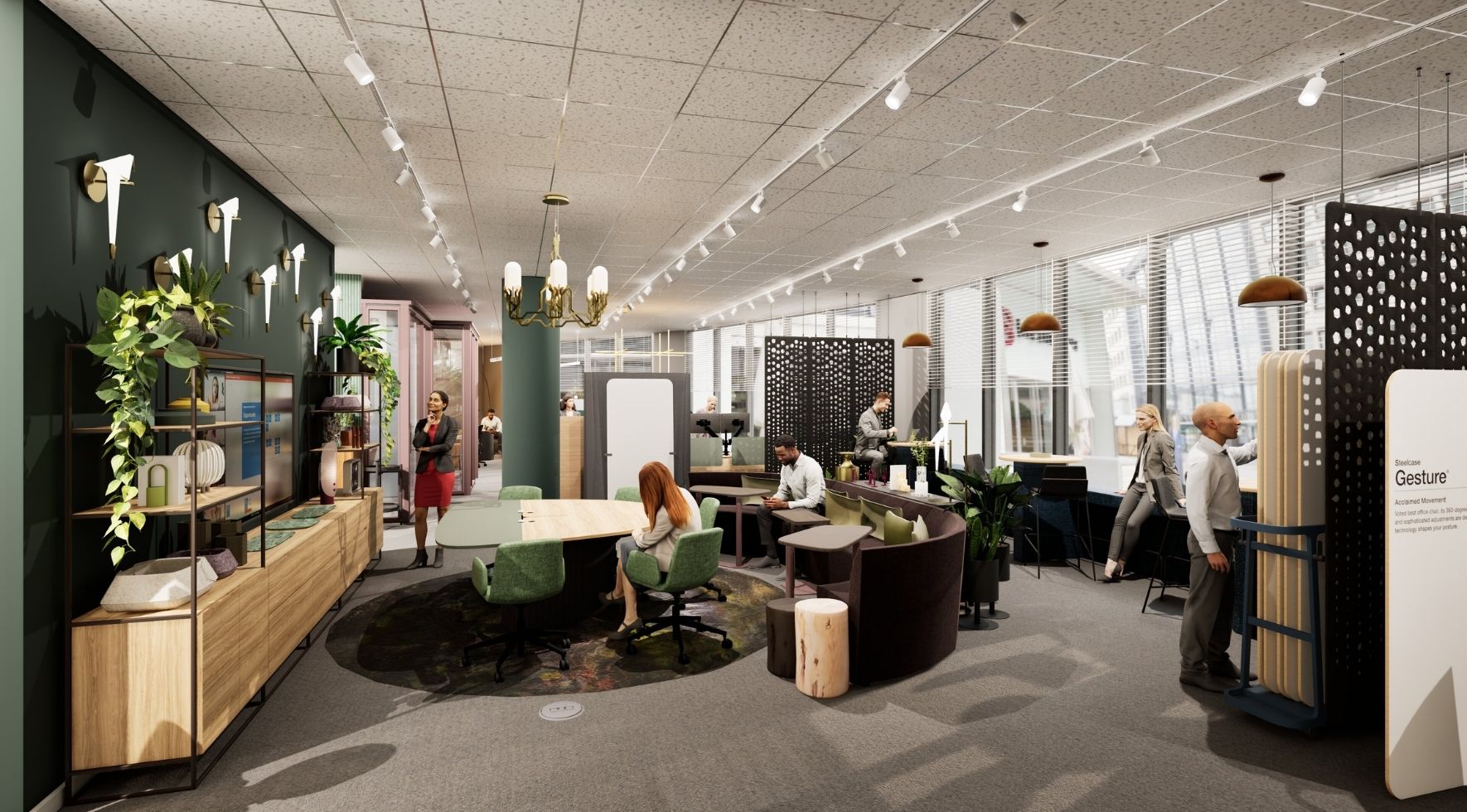
IMAGE: Example of one of Kat’s photo-realistic renderings. Her renderings incorporate the interior architecture, furniture and accessories in the space to a holistic vision of the final space. FUN FACT: Kat submitted a 3D animated rendered video of this space to the CETx awards 2025 and took home 1st place for Best Animated Fly Through!
Can you share an example of a project where your early concepting or visualization work completely shaped the final design outcome?
Kat: There was an RFP I submitted for earlier this year that included several conceptual mood boards. Based on the timeline, there wasn’t a chance to three-dimensionally model the entire space, so I rooted our design response with these mood boards. We ended up winning the project & are starting install in the new year! A good majority of the final selections were pulled from my initial mood boards – it was an incredibly rewarding feeling to see my initial decisions lead to the final design.
How do you balance creativity with practicality — ensuring a concept both inspires and works in real life?
Kat: Every design decision I make, even conceptual, is always rooted in reality. If something doesn’t function properly, no matter how cool it looks, it’s just not going to work. Throughout my design process I always ensure that my space planning layouts, furniture selections, and finish selections support the use of the space they’re in. The furniture is what the users are directly interacting with the most in any given space, and it’s my job to ensure it’s going to function properly. Of course I want the spaces I design to look exciting and feel unique, but I’m always thinking back to building code, seat heights vs table heights, cleanability of finishes, etc. Form follows function, always.
What’s your favorite part of watching a concept evolve from inspiration to a finished space?
Kat: Translating an abstract concept into a tangible space is honestly quite a magical process. All of my spatial concepts are rooted with the intention of evoking a certain feeling or emotion when inhabiting the space. Being able to experience this first-hand is an incredibly rewarding moment. After a project installs, making my final trip to site is one of the most exciting moments of a project for me.
How do you see the role of design storytelling evolving in the next few years, especially given AI advancements?
Kat: As designers are beginning to utilize AI within their processes, I see a few big shifts in the evolution of design storytelling. I’m predicting changes in the realms of concept development, conceptual visualization and technical information analysis. I’m an advocate for utilizing AI in the early conceptual stages of design – it’s a great tool for developing conceptual visuals but is lacking the required realism that human touch brings to a design project. Due to the shortcomings of current AI design models, especially with their lack of necessary spatial awareness, I hesitate to utilize AI for much more than concept development or visual inspiration. For example, I simply don’t trust AI to develop a successful space plan that is to building code, considers key adjacencies, flows naturally and is dynamic and engaging. However, it can be a powerful tool to help guide conceptual development, refine renderings, analyze information, and create conceptual visualization. I also predict that due to the AI design boom, clients are going to value human touch on their design projects more than ever before. There’s going to be an over-saturation of AI content & it’s already happening. With this, I feel like more emphasis and respect will be shown to designs that are human-created.
 Kat Monahan, Associate IIDA
Designer
kmonahan@red-thread.com
Kat’s responsibilities include analyzing work modes and workplace factors, planning and designing workplace environments and selecting solutions that meet customers’ needs and expectations. This includes but is not limited to space planning, specification, installation planning and product detailing.
Kat joined Red Thread in 2023 and has over 7 years of industry experience. She holds a Bachelor of Science in Interior Architecture & Design from Mount Ida College.
Design That Feels Personal and Built to Last
As workplace design continues to evolve alongside new tools and technologies, Kat believes the heart of great design will remain unchanged. Human insight, collaboration, and intention are what turn ideas into spaces people truly connect with. Whether through conceptual mood boards, immersive renderings, or hands-on material studies, her work shows that when form follows function and storytelling guides every decision, the result is more than a finished space. It’s an experience that feels purposeful, personal, and built to last.
Ready to see your space before it’s built? Connect with our design and visualization team to explore concepts, materials, and photo-realistic renderings that bring clarity and confidence to every decision.