
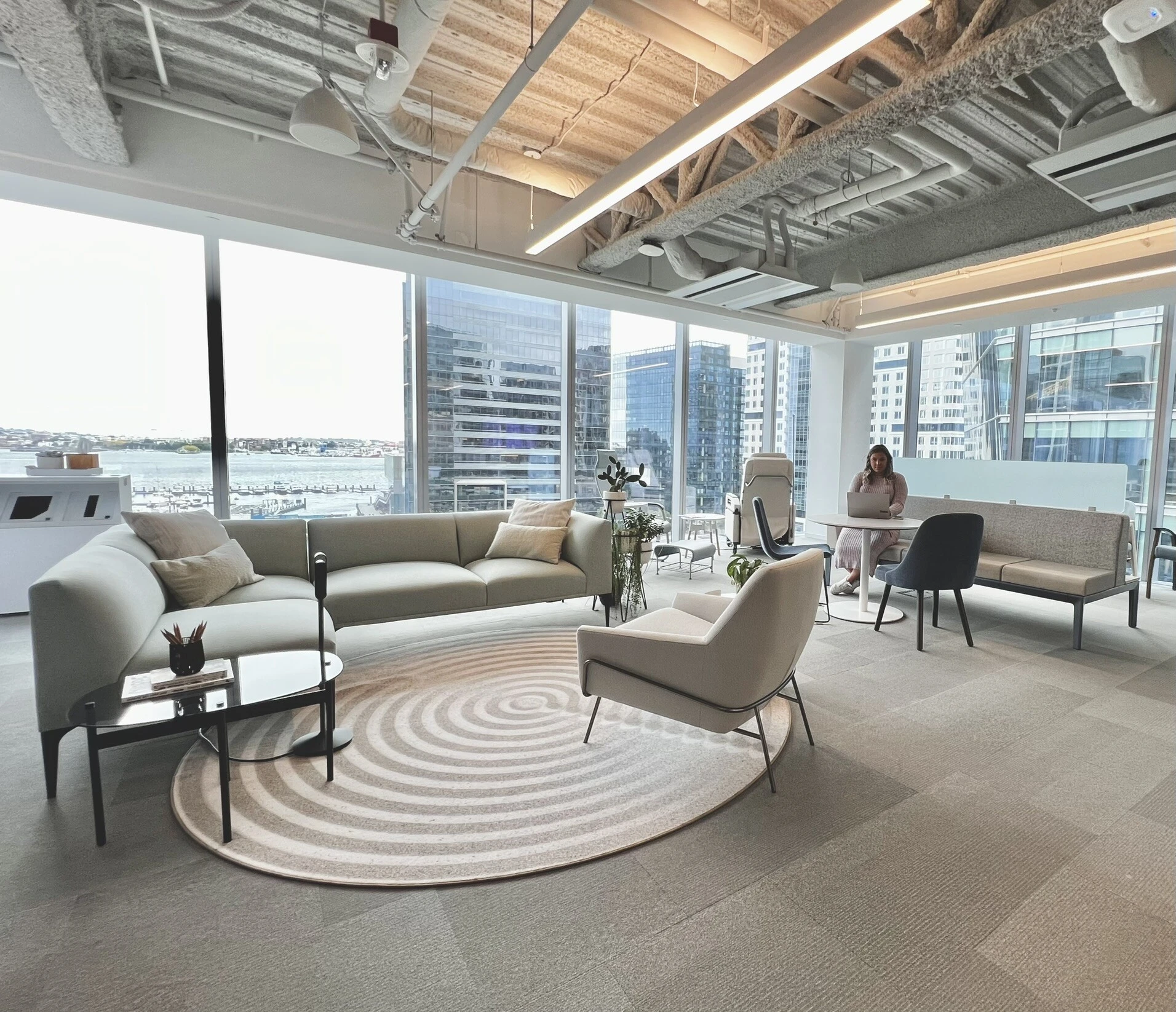
Third space design brings comfort and flexibility to the workplace through ancillary furniture and modern lounge spaces.
Work today doesn’t live in a single place.
It stretches across environments, shaped by both the structure of the workplace and the comfort of our houses. That sense of familiarity and ease has become our emotional baseline. The office, on the other hand, brings opportunity, purpose, and momentum. As hybrid work blends these experiences, the office has taken on a new role: a place designed to make the connection between home and work feel more natural.
This is where third spaces come into play.
When thoughtfully designed within the workplace, third spaces help ease the transition between home and work and support more natural ways of working.
What Is a Third Space in the Workplace?
In the workplace, a third space is an area outside traditional work zones that supports informal, flexible ways of working. Unlike assigned desks or conference rooms, third spaces are designed for in-between moments — when people need space to think, connect, pause, or transition.
You’ll often see third spaces used for:
- Quick conversations or casual collaboration
- Independent work without isolation
- Taking a call without booking a room
- Sitting down between meetings
In third space design, these areas are intentionally shaped to feel comfortable, intuitive, and adaptable throughout the day.

Why Third Space Design Matters
While furniture plays a key role, third space design is ultimately about experience.
Modern office lounge furniture helps establish comfort, but it’s the combination of layout, scale, materials, lighting, and acoustics that makes a third space feel intentional. When designed well, these spaces feel intuitive. People don’t wonder if they’re “allowed” to sit there. They just do.
The most effective third spaces support everyday work without calling attention to themselves.
How Ancillary Furniture Supports Third Space Design
Ancillary furniture is what brings third spaces to life.
These flexible, informal pieces make it possible to create environments that adapt throughout the day. Rather than serving a single function, ancillary furniture supports a range of uses and work styles.
Common third space elements include:
- Lounge and soft seating
- Café, occasional, and communal tables
- Benches, banquettes, and stools
- Mobile or lightweight storage
- Rugs, lighting, and accessories
Together, these pieces create third spaces that feel approachable, comfortable, and easy to use.
How to Design a Third Space in the Workplace
As home has become part of the daily work experience, expectations for the office have changed.
Third space design often draws inspiration from residential and hospitality environments. Ancillary furniture, warmer finishes, and layered, touchable materials such as upholstery, wood, and textured fabrics help bring a sense of ease into the workplace while maintaining a polished, professional feel.
This matters because people are shifting posture and mindset in third spaces. They may be collaborating, resetting between meetings, or having informal conversations. Softer, more touchable materials signal that it’s okay to settle in.
Where Are Third Space Examples in the Workplace?
Third spaces in the workplace often activate areas that were once overlooked, including:
- Lobbies and reception areas
- Amenity spaces and cafés
- In-between zones along circulation paths
- Informal spaces adjacent to team neighborhoods
By designing these moments intentionally, the workplace becomes more connected and more human overall.
Using Third Space Design to Express Brand and Culture
Designing third spaces starts with exploration. Seeing seating, storage, tables, lighting, accessories, rugs, and art together allows teams to understand not just what a space looks like, but how it feels. Instead of signage or graphics, brand shows up through materials, color, and detail. A curated collection of ancillary furniture with interesting textures, unique design elements, and local influence can reflect culture in a way that feels natural and authentic. It’s brand expression you experience, not brand messaging you read.
As our own Workplace Consultant Jess Klay shared in her latest Workplace Wednesday series, art is not just decor in the workplace; it’s experiential design. When it’s purpose built and intentional, it awakens the senses and sparks curiosity. It creates moments of pause. It gives people something to gather around, to point to, to talk about. In environments where many offices can feel transactional, art signals that creativity, craft, and human expression are valued. That is culture made visible.
This philosophy comes to life in our Andover space, where a custom mural designed by our own Lory Marsocci and assisted by designer Ashley Snight was part of the ancillary strategy from the start.
Rather than treating art as an afterthought, the mural was integrated alongside furniture, finishes, lighting, and flow. It anchors the space visually and emotionally, creating an immediate sense of identity the moment someone walks in.
We also carefully selected two additional pieces of Lory’s artwork for the space, layering her creative perspective throughout the environment. That continuity matters. It reinforces story, strengthens visual cohesion, and ensures the art feels embedded in the experience rather than placed on top of it.
Together, these pieces do more than decorate walls. They create a shared reference point for employees and guests. It’s a tangible example of how ancillary elements, when curated intentionally, shape culture and bring a workplace to life.
Designing third spaces often starts with seeing what’s possible.
Our Third Space Ancillary Lookbook makes it easy to explore inspiring solutions for seating, storage, tables, lighting, accessories, rugs, and art, all in one place. Inside, you’ll find a curated collection of third space ideas, access to 90+ ancillary furniture manufacturers, quick ship availability insights, and direct links to brand websites for easy exploration.
Whether you’re looking for inspiration or refining a specific space, the lookbook is designed to support thoughtful third space design and help translate ideas into environments that feel intentional, comfortable, and human.


