
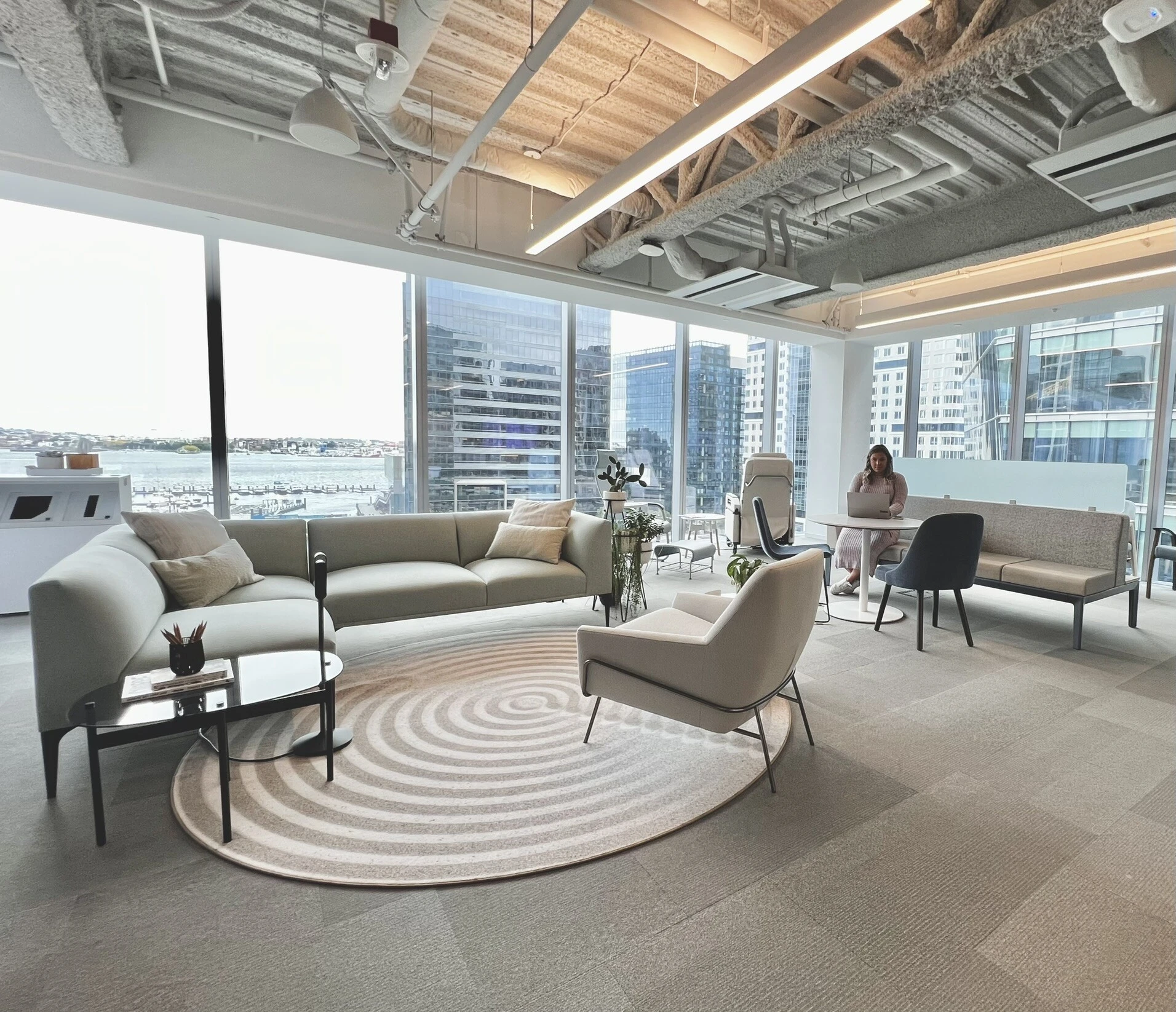

MHEC’s CEO shares insights on workplace strategy, organizational growth, and building a culture driven environment.
The Massachusetts Higher Education Consortium (MHEC) is a nonprofit purchasing consortium serving public institutions in New England, including higher education, municipalities, K-12 schools, libraries, and other educational non-profits. As the organization grew beyond its original footprint within UMass into multiple separate offices, something became clear: the physical environment no longer reflected the collaborative, connected culture MHEC had built.
The move to a new 10,000 square foot workplace in Hadley was not simply about bringing teams under one roof. It was a deliberate investment in people, engagement, and the future of the organization. We sat down with CEO Michael DiYeso to talk about what sparked the change, what it represents, and how the new space is already shaping MHEC’s next chapter.
When did you first realize MHEC had outgrown its previous space?
Michael: I joined in 2019, and it became clear pretty quickly that we had outgrown the space. We had expanded as much as we could within our existing footprint, but the environment just wasn’t supporting the way we wanted to work and grow as an organization. Everything was centered around individual offices, and what was missing was interaction, collaboration, and those everyday moments that help build culture.
There wasn’t even a shared space where people could gather for lunch or have casual conversations. It felt very siloed, and ultimately, the space couldn’t evolve with us. At that point, it was obvious the next step needed to be a move.
What was the most important goal you hoped to achieve?
Michael: We wanted a space that truly brought people together. A place where employees could grab a coffee, share lunch, connect, and build relationships throughout the day. More than anything, we needed an environment that reflected the growth and momentum of our organization.
We wanted the space to represent who we had become, showcasing the hard work of our employees, the strength of our partnerships, and the scale and professionalism of what we deliver.
What does a strong workplace culture look like to you?
Michael: It’s about energy, engagement, vibrancy, even fun. A space that naturally enables that.
We wanted people to feel it the moment they walked in that they matter. That we’re willing to invest in an environment that’s not just functional, but genuinely enjoyable. A place to step away, recharge, and feel proud of where they work. One weekend, I came in and saw an employee with their child. The kid looked around and said they wanted to have their birthday party there. That stuck with me. It says everything.
“One weekend, I came in and saw an employee with their child. The kid looked around and said they wanted to have their birthday party there. That stuck with me. It says everything.”
What role did visiting Red Thread’s showroom play in shaping your decisions?
Michael: We went to Red Thread’s Workplace Innovation Hub in East Hartford to see what was possible. For me, it was like being a kid in a candy store. It’s one thing to flip through a catalog, but walking through real spaces makes it click. The open kitchen area we ended up with is almost a direct reflection of what we saw there. The lighting, the layout… it just felt right. It gave us a clear picture of how everything could come together, from workspaces to conference rooms and beyond.

How has the space impacted recruiting and retention?
Michael: It’s been a big draw. New employees love it, and so do the people who have been here for years. It reinforces that we’re investing back into our people, our members, and our suppliers. It shows strength, longevity, and that the people who work here matter.
How has the new space impacted the way employees work?
Michael: It was definitely a shift, both culturally and from a business standpoint. Everyone still has their own space, but the overall environment is more open. We layered in private areas too, like phone booths and enclosed meeting spaces, so people have choice in how and where they work. That’s been the biggest change. People are starting to move more throughout the day, choosing spaces based on what they need in the moment.
We even gave everyone headphones to make the transition easier. The goal was to make the move from closed offices feel natural, not forced. Now, people are settling in and really using the space the way it was intended.
What’s been the biggest shift in how people work?
Michael: For me, it’s those small, everyday moments. Seeing people stand up, turn to each other, and start talking right at their workstations. Ideas getting exchanged in real time. Collaboration and connection just happen naturally now. And with such a mix of experience levels in the space, those interactions have become even more valuable.
What happens in the café and shared spaces?
Michael: A lot, actually. Everything from holiday celebrations and supplier trainings to board meetings, day-to-day business, and social events. At times, we’ve had 8 to 10 suppliers in the space all at once. It’s really evolved into a central hub where people come together, connect, and get things done.
The cafe and boardroom are open for members to use, free of charge, whether it’s for meetings or trainings. That was something we felt strongly about from the start. It’s our way of giving something back and continuing to invest in the people who are part of this community. We’d love to see even more members and suppliers make use of it. The door is always open.
How does the space reflect how MHEC operates?
Michael: One of our guiding principles is having a “leapfrog mindset,” and I think this space really shows that. We didn’t just plan for today, we thought ahead. It reflects how we think differently and how we support our stakeholders. We also experienced it firsthand as a customer, using an MHEC contract with Red Thread. The breadth and quality of options really stood out. We never felt limited, in fact, it was the opposite. With the right partner, you’re able to navigate those choices in a way that feels clear and manageable.
Any final comments you’d like to share about the overall experience and outcome?
Michael: The response has been overwhelmingly positive. Employees, members, suppliers, even prospective hires and consultants have all felt it.
And honestly, we couldn’t have done it without Red Thread. Having everything integrated and working with one partner made a huge difference. It simplified the process and helped bring the whole vision together.


