
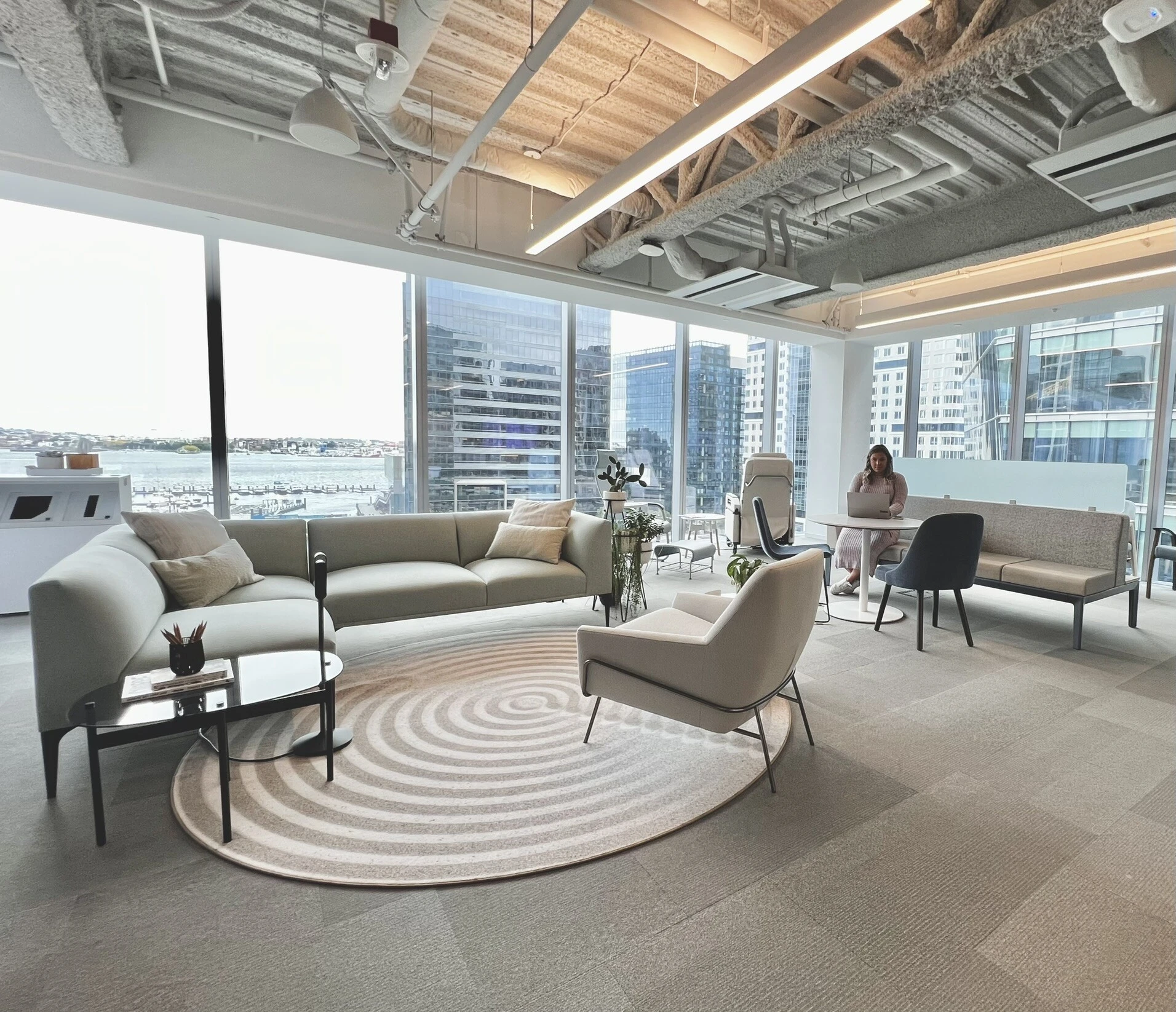

Planning people, place, and technology together transforms the workplace experience. Discover insights from our WorkX session on designing for connection.
When people, place, and technology are planned together, the everyday workplace experience at work gets easier. Meetings start on time. Spaces fit the task. The office feels worth the trip.
That was the overarching theme for this year’s WorkX. We closed out the conference with a main stage session – The Experience Equation: Designing for People, Technology, and Place in a Connected World. The moderator, Red Thread’s own Heather Long, Workplace Technologist, led a conversation with:
- Aakash Rai, Co-founder at SpaceTI
- Nicole Aguinaga, Supervisor, Corporate Space Planning & Facilities at Tandem Diabetes Care
- Rebecca Bergstrom, Sr. Manager Workplace Strategy & Design at Sun Life
- Ryan Bender, Director, Global Client Experience at Northeastern University
Below are the takeaways we’re bringing back to our teams and clients.
What “workplace experience” really means
A good workplace experience is when things just work without a lot of explanation. You can find a space quickly, the room fits the task, and you join the meeting with a single tap. Controls look the same in every room, the camera frames people well, and sharing content is obvious. Clear wayfinding and digital signage show what is free now and what is booked next, while reliable power, solid Wi-Fi, and comfortable acoustics keep attention on the work. Choice is part of that ease, with private phone rooms for quick calls, quiet spots for deep focus, cafés that feel like coffee shops, and open areas where teams can huddle or bump into each other naturally. When options are clearly labeled and easy to book, no one wastes time guessing where to go, and small touches like consistent cables, a place to set a bag, and lighting that looks good on camera finish the job.
Flexibility matters because hybrid is the norm, so the office must support focused work and connection in the same day. On the workplace technology side, simple and consistent beats clever, which means one join button, the same interface everywhere, and short instructions that match what people see on the screen. When rooms, tools, and cues are predictable, people stop troubleshooting and start collaborating, and over time that predictability builds confidence, which is what a good workplace experience is really about.
Measure more than attendance
If you only track badge swipes, you see who showed up but not why they came in, what they tried to do, or where things got in the way. The panelists pair attendance with richer inputs like occupancy sensors, room booking data, Wi-Fi association, surveys, focus groups, help desk tickets, and quick coffee chats. When you layer these, patterns start to surface. You can spot the days with real energy, rooms that are constantly the wrong size, tech that sits idle because it’s confusing, or calendars that look full while spaces are actually underused.
The value is in turning those patterns into clear decisions. Northeastern did this by standardizing Microsoft Teams Rooms across more than a thousand rooms, which led to a 66% drop in support calls for classrooms, meeting rooms, and event spaces. That result points to a simple truth: fewer features, applied consistently, create less friction and more confidence. People learn one way of working, and it follows them from space to space and campus to campus.
What brings people in
Small, human things make a big difference. A café that truly feels like a coffee shop invites people to start the day, host a quick one-on-one, or reset between meetings. Bevi and coffee perks signal hospitality and make the office feel welcoming, not transactional. Corridors come alive when they feature digital signage, project highlights, and casual landing spots where people naturally pause and connect. Social zones that work for a team lunch and can scale for a larger gathering help the office flex to what the day requires. Most of all, leaders who show up in person set the tone and make it clear that the office is a place to meet, share ideas, and do real work together.
Programming helps too. The perfect example is Sun Life’s Together Tuesdays that create a reliable weekly pulse, which you can see in the data and feel in the room. When people know there will be energy, people to meet with, and simple support like workplace tech help and catering, it creates value.
Where physical and digital click
Camera-ready rooms with standard controls make hybrid meetings feel equitable because everyone can see and be seen without extra setup. Simple, repeatable room types lower the learning curve, while 360 room photos and live status dashboards set expectations before people arrive. When the workplace tech works the same way across locations, faculty, students, and employees who move between sites feel confident instead of anxious.
Things tend to clash in complexity. Many early hybrid rooms were over-engineered, which led to confusion and downtime. Calendar and room-booking systems can also work against each other if they are not integrated. In most cases, the fix is straightforward: simplify the stack and standardize the workplace experience.
Five moves to try next
- Standardize the experience
- Same controls and meeting flow in every room. Consistency lowers tickets and stress.
- Layer your data
- Combine sensors, surveys, tickets, and observation. Look for patterns by day, team, and room type. Let the full picture guide changes.
- Plan digital and physical together
- Match room types to meeting behaviors. Use the right screens, cameras, and layouts for equitable hybrid time.
- Create a predictable pulse
- Pick a weekly in-office day. Support it with onsite coordinators who connect space, tech, and catering so teams can focus on each other.
- Make it simpler
- Remove steps. Document the basics with quick visuals. Add 360 photos to the room directory and show live room status.
Why this matters for us
Our job at Red Thread is to make work better by pairing well-designed environments with the platforms and analytics that keep improving them. The panel reinforced what we see across projects. Experience is not a one-time installation; it’s a system you continuously tune.
If you are revisiting your own workplace experience, we’re happy to help. Bring your data, your pain points, and your wish list so we can help translate it into spaces and systems people enjoy using.


